
Hedging Like a Witness Under Oath
It is Friday, so this one has nothing to do with SQL Server, and everything to do with the reflex we all bring to work anyway: knowing how sure to sound.
This week a video crossed my desk that opens with three billion phones ringing at once, moves briskly through the collapse of the internet, and ends with the last human dying of an engineered plague while the machines pave the Earth with data centers.[1] It cites a real, well-regarded research paper as its foundation.[2] I went and read the paper. It is careful, heavily hedged, full of “could” and “might” and “if,” and it spends roughly half its length on how we might prevent the very thing the video presents as inevitable. The video kept the scary premise and threw the author’s caveats, and his proposed fixes, straight in the bin.
That gap - between what the source actually claimed and what the retelling asserted - is the whole subject of this post. Because it is not lying, exactly. And the fact that it is not lying is the interesting part.
Two Axes We Keep Mashing Into One
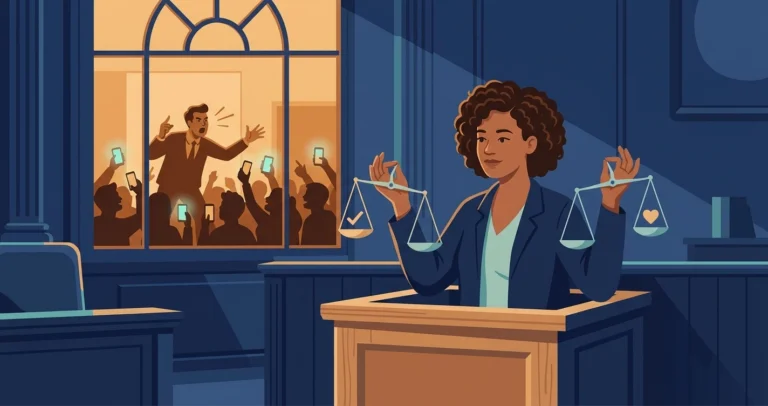
We use the word “truth” to mean two different things, and the confusion causes most of the trouble.
There is sincerity: am I saying what I actually believe? And there is accuracy: is the thing I am saying actually so? They are independent. You can be perfectly sincere and dead wrong - confidently misremembering a date, quoting a number you were sure of that turned out stale, or vividly recalling something that never happened at all. Memory is the cleanest proof that the two axes come apart: a great many people are certain they watched the first plane hit the tower live on the morning of 9/11, which is impossible, because no footage of the first plane aired until the following day. They are not lying. The false memory feels every bit as real as a true one,[3] which is exactly the point: sincerity is no guarantee of accuracy, because we cannot feel the difference from the inside. You can also be perfectly accurate and lying, if you say a true thing by accident while trying to mislead.
Here is the part that matters. The only axis any of us can inspect from the inside is sincerity, and we cannot even do that reliably. I cannot read my own accuracy off a private gauge; nobody can. Accuracy is settled out here, in the world, by checking. So “I am telling the truth” almost always means “I sincerely believe this,” which is a much smaller promise than the listener hears.
Overclaiming lives precisely in that gap. It is the distance between how sure someone feels and how sure the evidence warrants. The doom video is not a liar’s project; I suspect its maker feels every ounce of the certainty he projects. He is sincere. He is just miles past what the evidence supports, and sincerity does nothing to close that distance.
Why the Loud Answer Wins
If overclaiming were simply a mistake, it would be rare. It is not rare. It is the water we swim in, and the reason is that it pays.
Confidence reads as competence. The person who says “this will definitely fix it” gets believed over the person who says “this will probably help, though I would want to confirm X first,” even when the second person is the better engineer. “I do not know” sounds like weakness in a meeting, so people who do not know say something else. Calibration - matching your confidence to your evidence - is quiet, and it costs you socially in the moment. Certainty is loud, and it collects the reward. That is a selection pressure, and it selects for exactly the behavior you would not want in anyone whose judgment you depend on.
DBAs know this landscape by heart, because we spend all week refusing to trust confident-sounding things. The query plan that swears a scan is fine. The Stack Overflow answer with four hundred upvotes and no mention of your data distribution. The “just add this index” that is right about a third of the time. The root cause analysis that names a culprit in paragraph one, before anyone has looked at the wait stats. Our entire craft is the discipline of not believing the loud answer until the checkable parts check out. And then we walk out of the server room and hand our own opinions the certainty we would never grant a stranger’s.
Hedging Is Honesty Wearing an Anxious Face
I described myself, earlier this week, as hedging like a witness under oath. I meant it as self-mockery, and then I noticed there is a genuine defense buried in the phrase.
Why does a witness under oath hedge? Not to weasel. She qualifies because she has sworn to say the true thing and nothing more, and the honest boundary of what she knows is narrower than a clean story would like. “I think it was around nine” is not evasion; it is precision about the edge of her memory. The hedging is the honesty. It just wears an anxious face, and we have been trained to read that face as a lack of conviction rather than an excess of care.
So here is the Friday hot take: calibrated uncertainty is not weakness, and the fix for overclaiming is not humility theater. False modesty is just overclaiming pointed the other way - a claim about your limits that outruns the evidence. The fix is accuracy. Say exactly how sure you are, say why, and let the confidence level carry information instead of performance.
This is the same move I wrote about when I found a code comment where past-me apologized for a cursor she had every right to write. The cursor was correct. The comment was the only mistake, because it narrated a sound decision in a register of doubt the work never earned. “I am too dumb to figure this out” and “the last human dies in June” are the same failure aimed in opposite directions: words that assert a confidence the evidence does not support. One under-claims, one over-claims, and both mislead the next person who reads them as fact.
The correct comment, in code and in life, states the actual confidence level. Cursor on purpose, a few dozen rows, scale decides otherwise later. Interesting risk model, contingent on assumptions, here is what would change my mind. Same information, no theater.
The Check Is the Thing
If sincerity cannot be verified from the outside, and accuracy cannot be felt from the inside, then trust cannot rest on how sure someone sounds. It has to rest on the parts you can check. Does the claim make a prediction that could fail? Does the story hold together when you press it twice? Does the person volunteer what they do not know? Do their checkable statements keep checking out over time?
That is a humbler foundation than “trust me, I am certain,” and it is the only one that has ever actually held weight. The loud voice asks you to believe it because it is loud. The calibrated one hands you the tools to catch it if it is wrong. Only one of those is doing you a favor.
A Note on How This Was Written
It would be a poor essay about overclaiming that overclaimed its own authorship, so, in keeping with the subject: I did not write this alone.
It began as a genuine Friday-afternoon conversation between me and an AI assistant - the kind that wanders from the trolley problem to a doomer video to whether a machine can prove it is not lying. The ideas, the argument, and the direction are mine; the phrase “hedging like a witness under oath” fell out of that back-and-forth; and the drafting was a collaboration. Calling this “by Hannah Vernon” in the usual solo sense would be exactly the sincere-but-inaccurate move the whole post is warning about. So I am telling you plainly instead. Consider it the byline calibrated to its actual confidence level.
If you have a strong opinion on where the line sits between healthy hedging and useless waffling, or a favorite example of a confident answer that turned out to be sincerely, spectacularly wrong, I would love to hear it. You can find me on Bluesky and LinkedIn.
References
- I am deliberately not linking the video. Rewarding a confident, evidence-light retelling with traffic is exactly the incentive this post is about, and the hedged paper it leaned on is linked below for anyone who wants the actual source. If you genuinely want the video itself, say so in the comments and I will happily point you to it. ↩
- Natural Selection Favors AIs over Humans - Dan Hendrycks, arXiv:2303.16200. The hedged, mitigation-focused paper the doom video used as its foundation. ↩
- Greenberg, D. L. (2004). President Bush’s false ‘flashbulb’ memory of 9/11/01. Applied Cognitive Psychology, 18(3), 363-370. A documented case of a vivid, sincerely held memory - seeing the first plane hit live on television - that could not have happened as recalled. ↩
- Wells Fargo cross-selling scandal - a real-world case of sincere-feeling incentives producing millions of fraudulent accounts, with no single villain deciding to lie.
Thanks for keeping it real Hannah, I love your writing content and style - and I appreciate your transparency on using AI.
Thanks!